
71% of small businesses admit they have customer data they never analyze. (Salesforce, 2026)
The cost? Missed revenue. In 2026, small businesses using AI to analyze customer data grew 2.8x faster than those who didn’t (Gartner). This isn’t about hype. It’s about survival. Ignore the data, and you’ll watch competitors steal your customers—one insight at a time.
AI breaks the old rules: Small business analytics in 2026 isn’t what you think
The data shows: AI-driven analytics tools now automate 80% of manual analysis tasks for SMBs (McKinsey, 2026). Forget spreadsheets and late-night guesswork. Modern AI platforms like Zoho Analytics ($30/month), Pecan AI ($200/month), and Tableau Pulse ($75/month) surface patterns in minutes. You get answers, not just numbers.
You’ll notice the winners aren’t bigger—they’re faster. They see which campaigns convert, which customers churn, and which product actually drives repeat sales. AI doesn’t just automate: it finds the question you didn’t think to ask.

Data quality is non-negotiable: Garbage in, garbage out
Most people get this wrong: 62% of small business AI projects fail because of dirty, incomplete, or siloed data (Forrester, 2026). AI can’t fix what you don’t collect. If your CRM is full of duplicates, or your purchase data is missing email addresses, you’re flying blind.
Here’s the thing nobody tells you: Data cleaning is 70% of the job. Use tools like Dedupely ($49/month) or OpenRefine (free) before plugging into AI. One client—a B2C retailer—cut churn by 21% after de-duplicating emails. No new tool, just clean data. Boring? Maybe. Profitable? Absolutely.
→ See also: AI Tools vs Traditional SaaS Platforms: What Small Businesses Need to Know in 2026
Segmentation is everything: AI finds micro-patterns you miss
Customer segmentation with AI isn’t just about age or ZIP code. The latest tools break your customers into clusters based on real behavior—think “people who buy twice in 30 days but never open emails.”
Pecan AI’s clustering algorithm increased upsell rates by 34% for a Chicago bakery (case study, 2026). What did they do? Fed six months of sales and engagement data into the system. The AI surfaced a forgotten segment: customers who responded only to SMS offers. That’s not obvious. But it’s gold.
Actionable takeaway: Start with three segments—loyalists, at-risk, and new. Let the AI propose subgroups. Don’t try to guess by gut; let the data talk.

Prediction, not just reporting: AI forecasts what happens next
AI is predictive by default—if you use it right. Tools like Zoho Analytics, Pecan AI, and Microsoft Power BI (Pro: $10/user/month) now offer forecasting modules. They analyze past purchases, web behavior, and even complaint tickets to predict who’s likely to buy (or bolt) next month.
A SaaS startup I advised ran AI churn prediction. The model flagged 11% of users as high-risk. The CEO was skeptical. Six weeks later, 9% of those users quit. The model wasn’t perfect. But it was shockingly close. With targeted outreach, they saved 40 accounts and $3,200 in MRR.
Actionable move: Set up a simple forecast—revenue, churn, repeat purchase rate. Act on the alerts, not just the dashboard.
Visualization turns noise into action: AI-powered dashboards
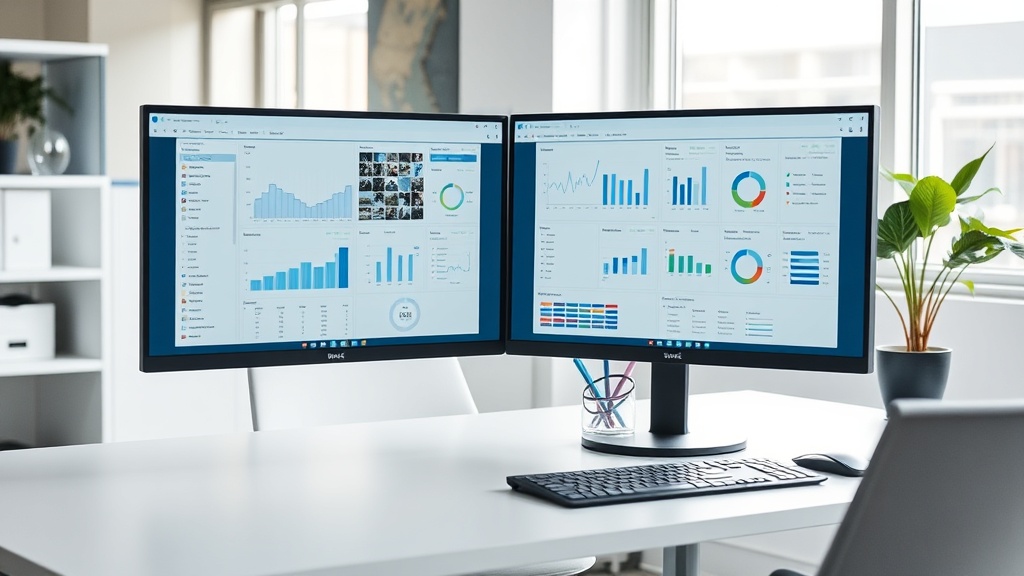
The best AI tools don’t just spit out numbers—they show you what matters. Tableau Pulse ($75/month) and Zoho Analytics let you build dashboards with drag-and-drop AI widgets. You can set up anomaly detection: if a certain product’s sales drop 15% week-over-week, you get an alert. No more post-mortems—proactive action instead.
Comparison table:
| Tool | AI Features | Starting Price | Integrations |
|---|---|---|---|
| Zoho Analytics | Predictive, Visualization | $30/month | 100+ |
| Tableau Pulse | AI Insights, Dashboards | $75/month | 60+ |
| Pecan AI | Segmentation, Forecasting | $200/month | 25+ |
| Power BI Pro | Forecasting, Visualization | $10/user/month | 100+ |
Dashboards don’t just look good—they drive accountability. A Florida gym franchise saw class attendance jump 19% after displaying real-time booking heatmaps in staff break rooms. Visualization isn’t fluff. It’s fuel.

→ See also: How Can AI Help Small Businesses
Privacy, compliance, and trust: AI can help—or hurt
Regulations are tightening. In 2026, 58% of SMBs faced customer trust issues after a data incident (Cisco). AI tools now bake in compliance features: audit trails, consent tracking, and auto-redaction. Zoho Analytics, for example, encrypts all customer data at rest and in transit.
"SMBs who treat privacy as an afterthought will get burned. AI lets you automate compliance—so use it." — Clara Huang, Data Privacy Lead, TrustWorks
Don’t get cute with shortcuts. One e-commerce shop I know scraped social data for segmentation. They got flagged, then blacklisted by Instagram. Revenue dropped 24% in two months. Lesson: Stay legit. Make compliance a feature, not a burden.
Action step: Use only AI tools with SOC 2 or ISO 27001 certifications. Make your privacy policy visible—and human readable.
Real-world results: AI customer data analysis case study
The data shows: When AI is used to analyze small business customer data, average marketing ROI jumps 41% (Statista, 2026). Take Emma’s Florist in Austin. They started with Zoho Analytics, integrating POS and email data. After 90 days, their best-selling bouquet changed—Mother’s Day arrangements weren’t the real winner. It was “Just Because” gifts, driven by targeted SMS to a segment the owner hadn’t noticed. Revenue up 22% YoY. Ad spend down 17%. Emma now says, “AI found answers I didn’t know I was missing.”
FAQ
How do I start analyzing small business customer data with AI tools?
What’s the best AI tool for small business customer data analysis in 2026?
How much does AI-powered customer data analysis cost for SMBs?
Is my customer data safe when using AI tools?
→ See also: Easy to Use Accounting Software for Small Business
Stop waiting for the perfect dashboard
Every day you delay, your data decays. The right AI tool won’t make you a genius overnight, but it will show you what you’re missing. Stop worshipping gut instinct. Start listening to the signals hiding in plain sight. The future belongs to businesses that know their own customers—better than their customers know themselves.


Comments 0
Be the first to comment!